Hair Extensions Coloring Guide
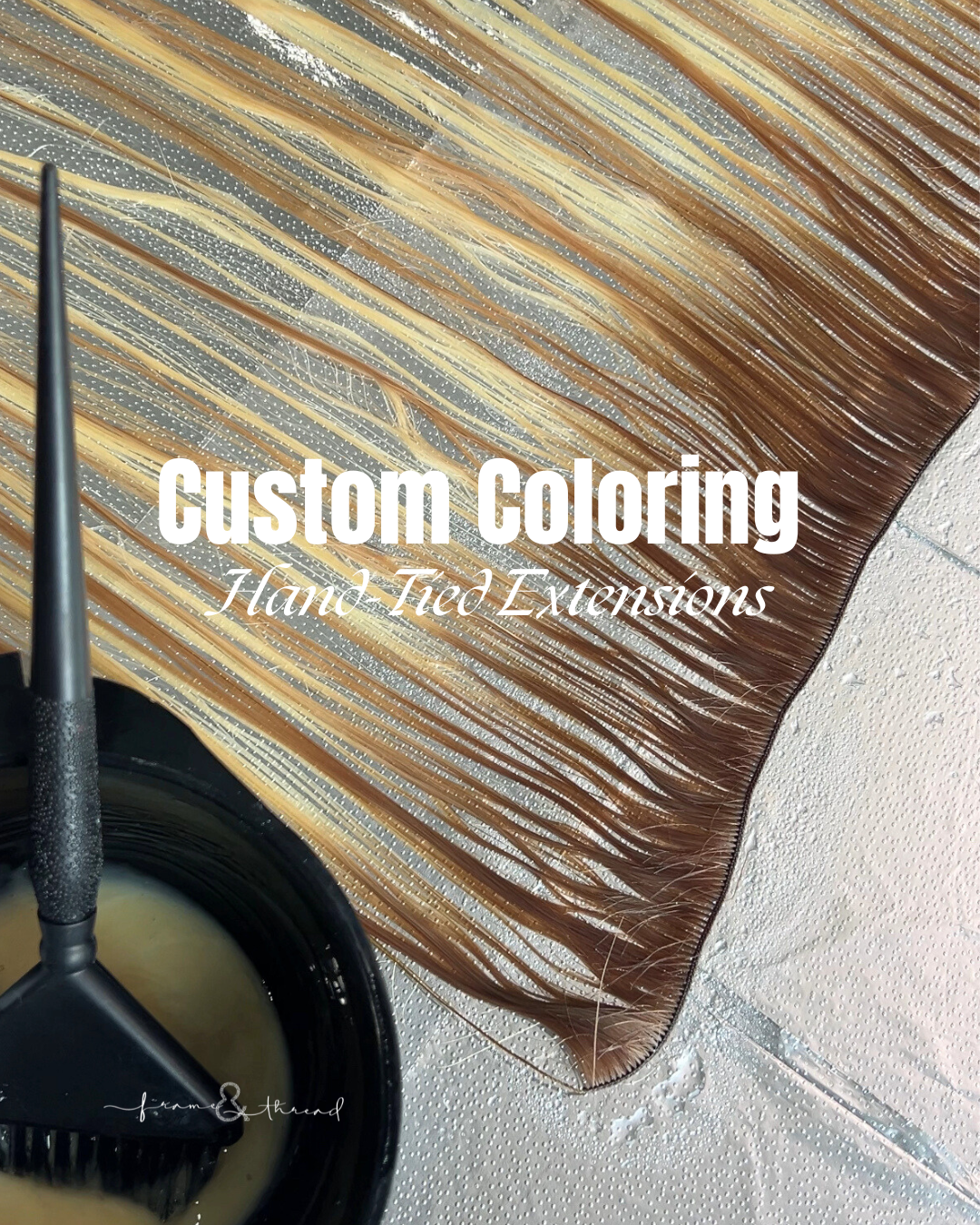
Our wefts our 100% silicone-free human hair. Because human hair is a natural product, some wefts can accept color a little differently. While the techniques we're showing are the proper way to color human hair extensions, your results can vary.
Color pigment can grab darker or inconsistently on ends or where the hair is more porous. This is more common on blonde & balayage wefts. Starting weft color selection, your color formula, ph levels, time, and the use of permanent, demi-permanent, or direct dyes will all factor into the end result.
We recommend a test strand before coloring any extensions. We are unable to accept returns on hair that has been altered. This guide is strictly for use by licensed cosmetology professionals.
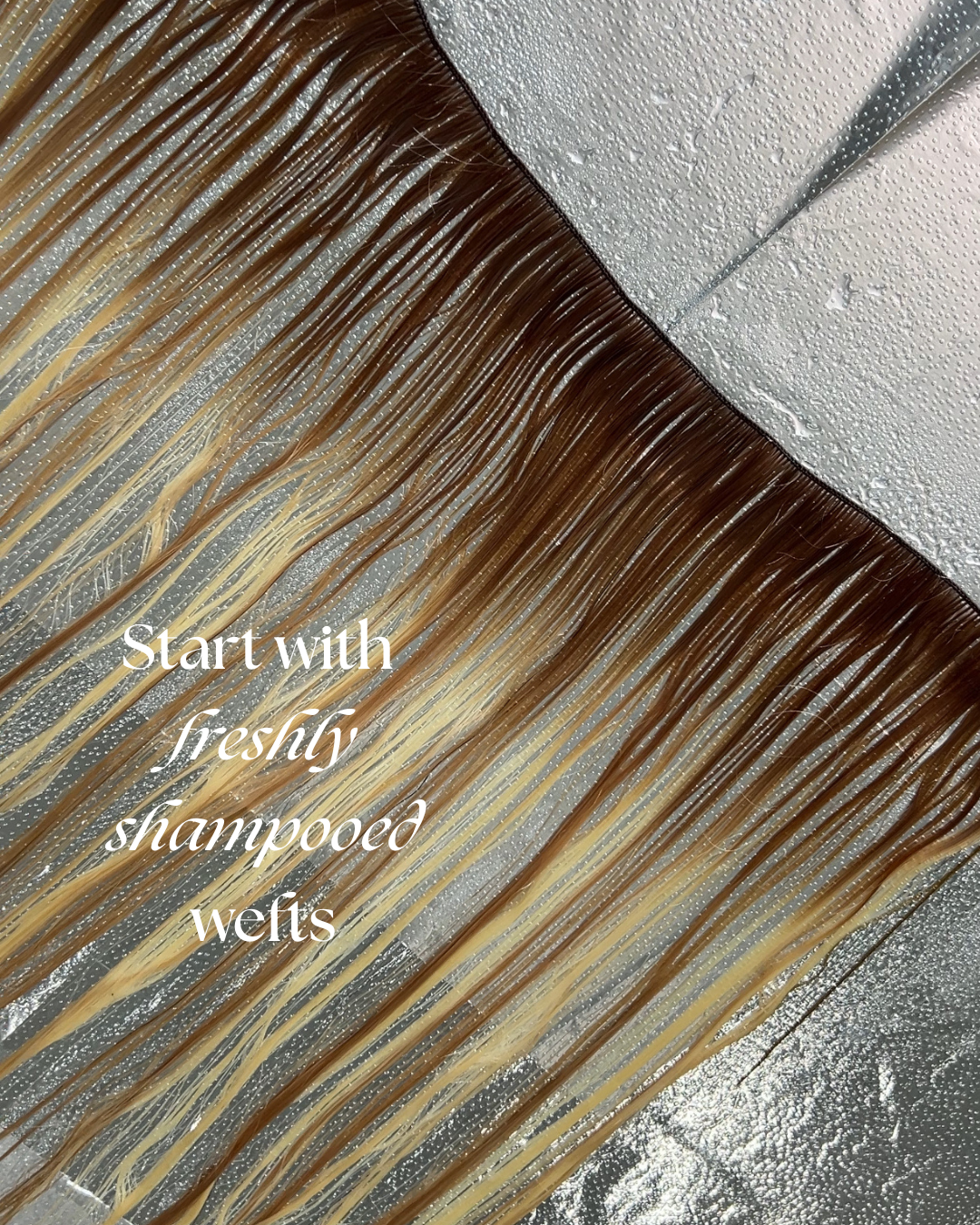
Lightly mist your work surface with water to prevent foils from shifting.
Lay aluminum foil long enough to fully support each weft.
Always unwrap wefts and lay flat to insure an even application.
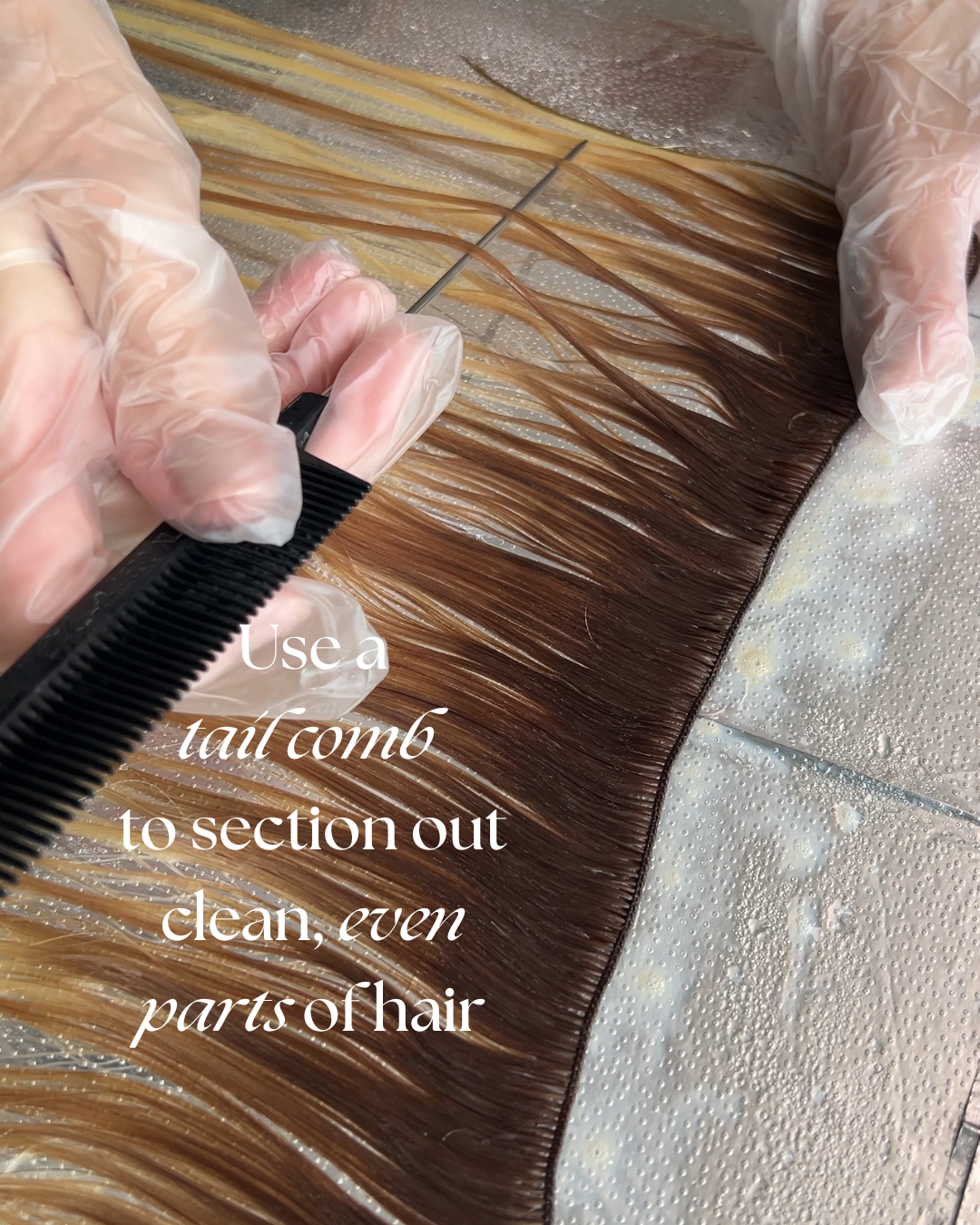
Place the weft onto the foil and comb through to keep the hair flat and aligned.
Shampoo and condition the extensions to help even out the porosity prior to coloring.
Always apply color to very damp hair for even saturation and softer diffusion.
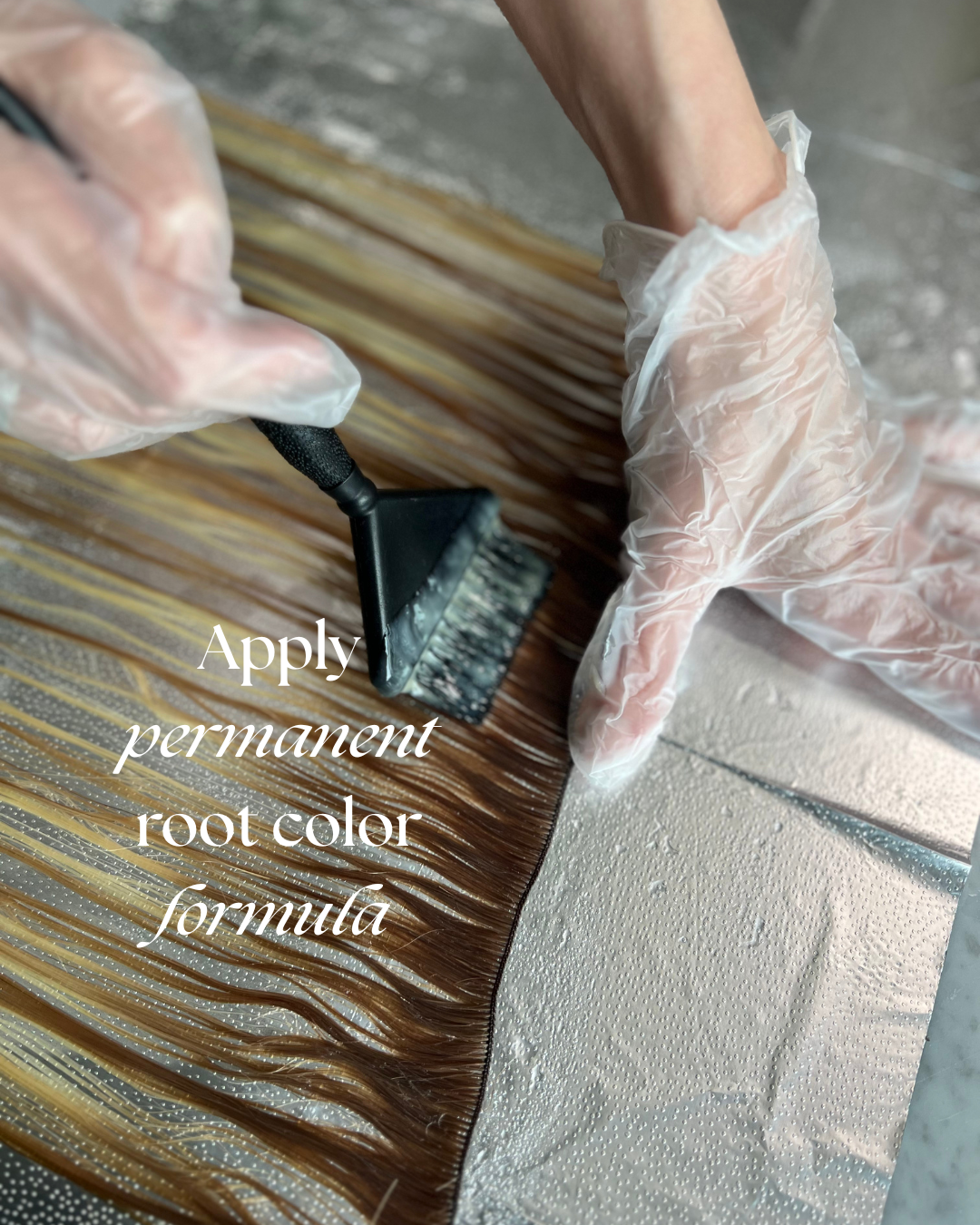
2. Apply the Root Color
We recommend using permanent color on the root.
 Use extra caution with demi-permanent, especially Shades EQ. Never use N, NB, or NA. With all other demi-permanent neutral and ash tones, we recommend adding some gold to the formula to prevent the hair from grabbing the base pigment and turning mauve or pink.
Secure the weft with one hand to keep it stable.
Begin applying color at half of the intended root depth
(Example: For a 1-inch root, start at ½ inch).
Apply generously while avoiding harsh or heavy lines—leave room for blending.
Flip the weft and repeat on the opposite side to ensure full, even saturation.
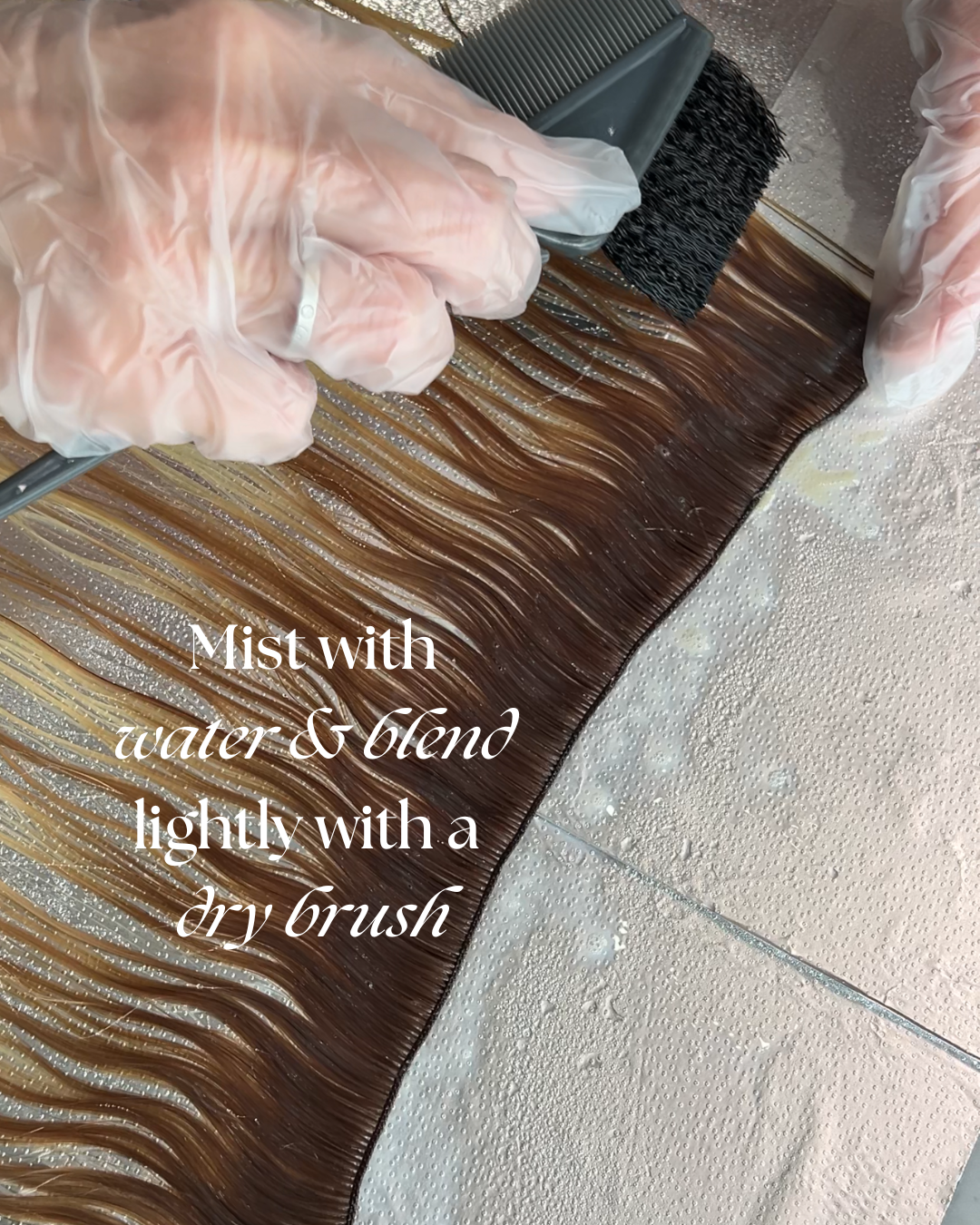
To ensure there are no harsh lines, mist lightly with a water bottle.
Use a clean dry color brush and gently blend the demarcation line.
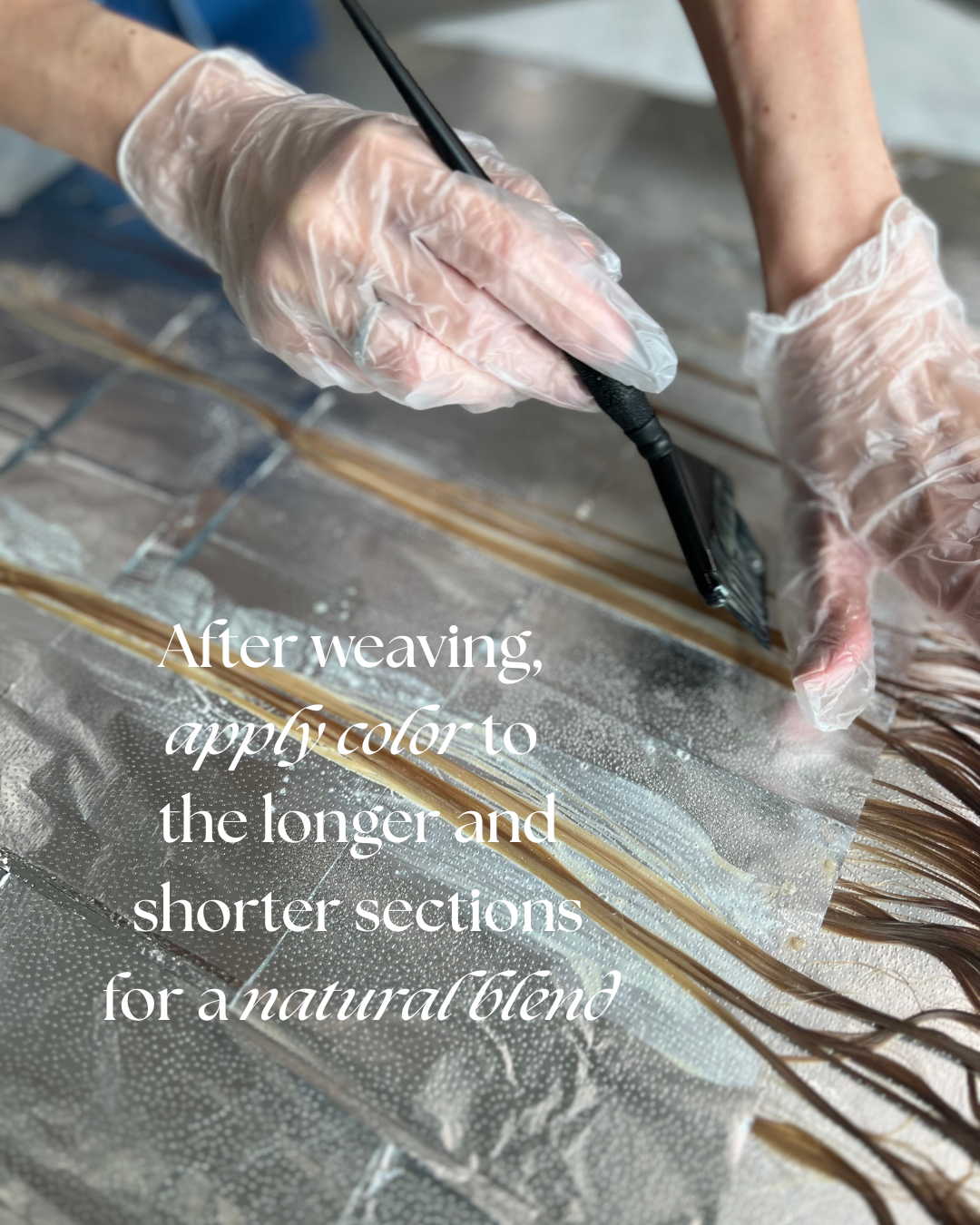
After weaving, apply color in a way that creates soft, natural dimension.
Use larger sections to add depth.
Use smaller sections to softly diffuse the color.
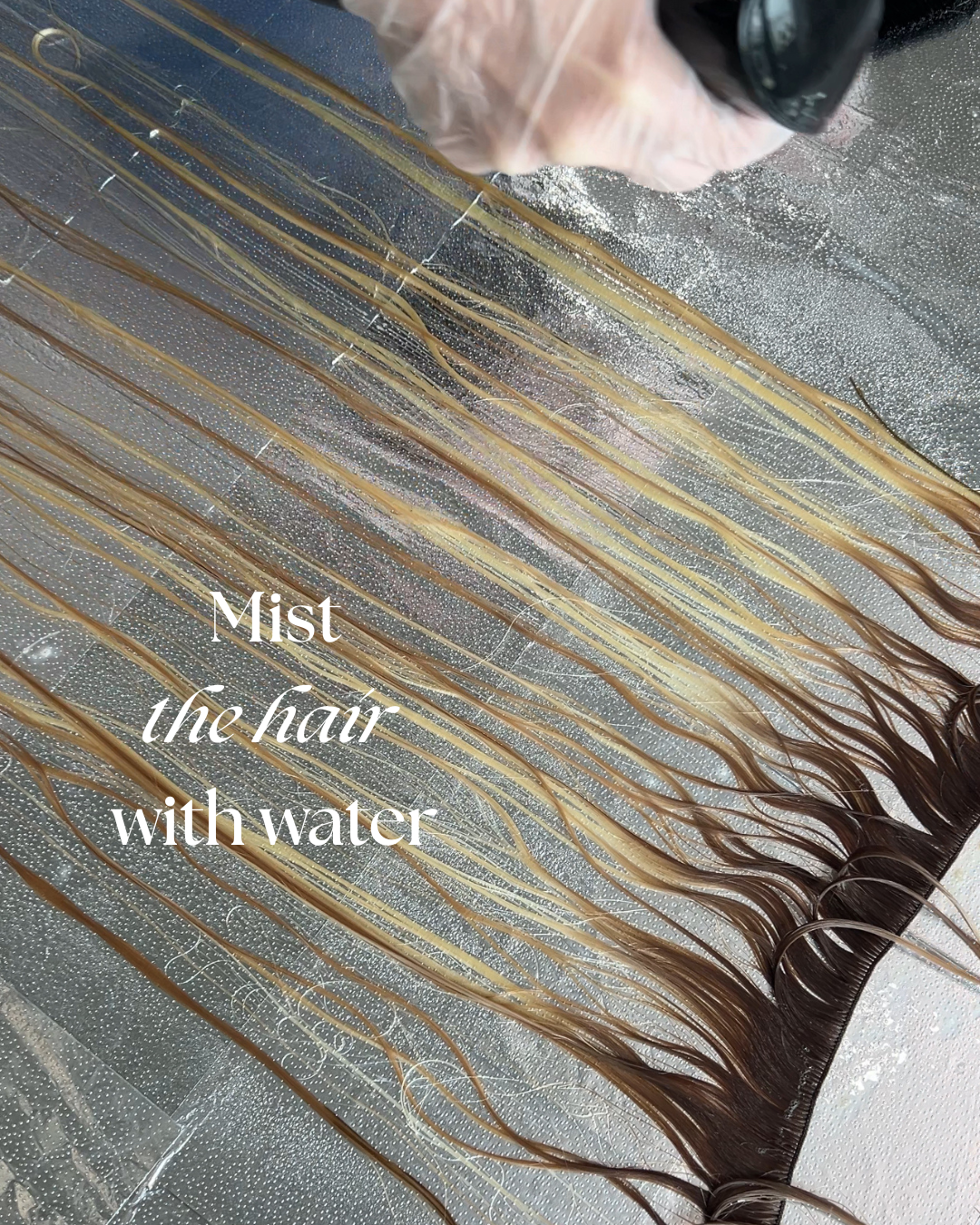
Lightly mist the hair with water to maintain control and flexibility.
Use a dry color brush to gently blur and blend between sections for a natural, seamless finish.
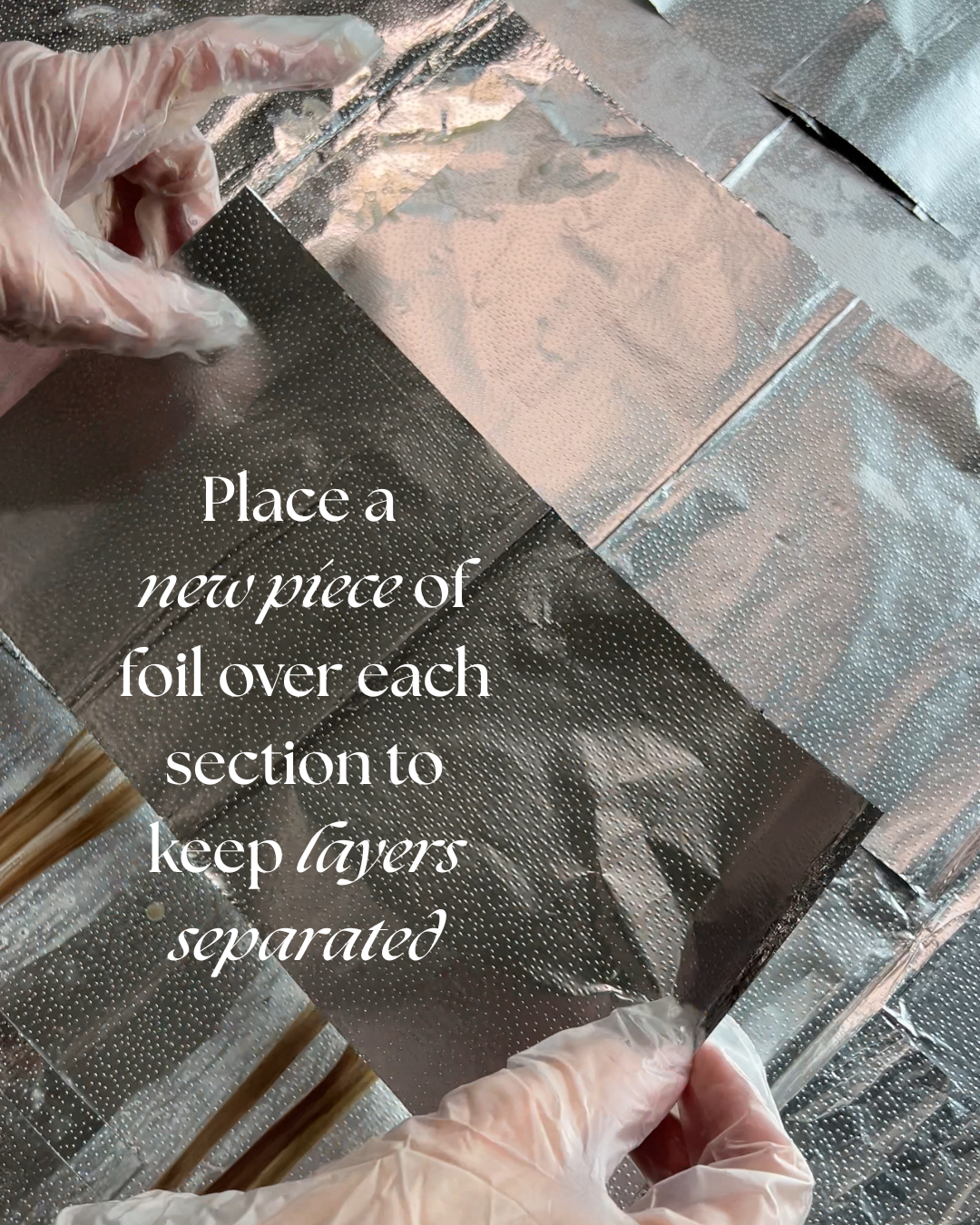
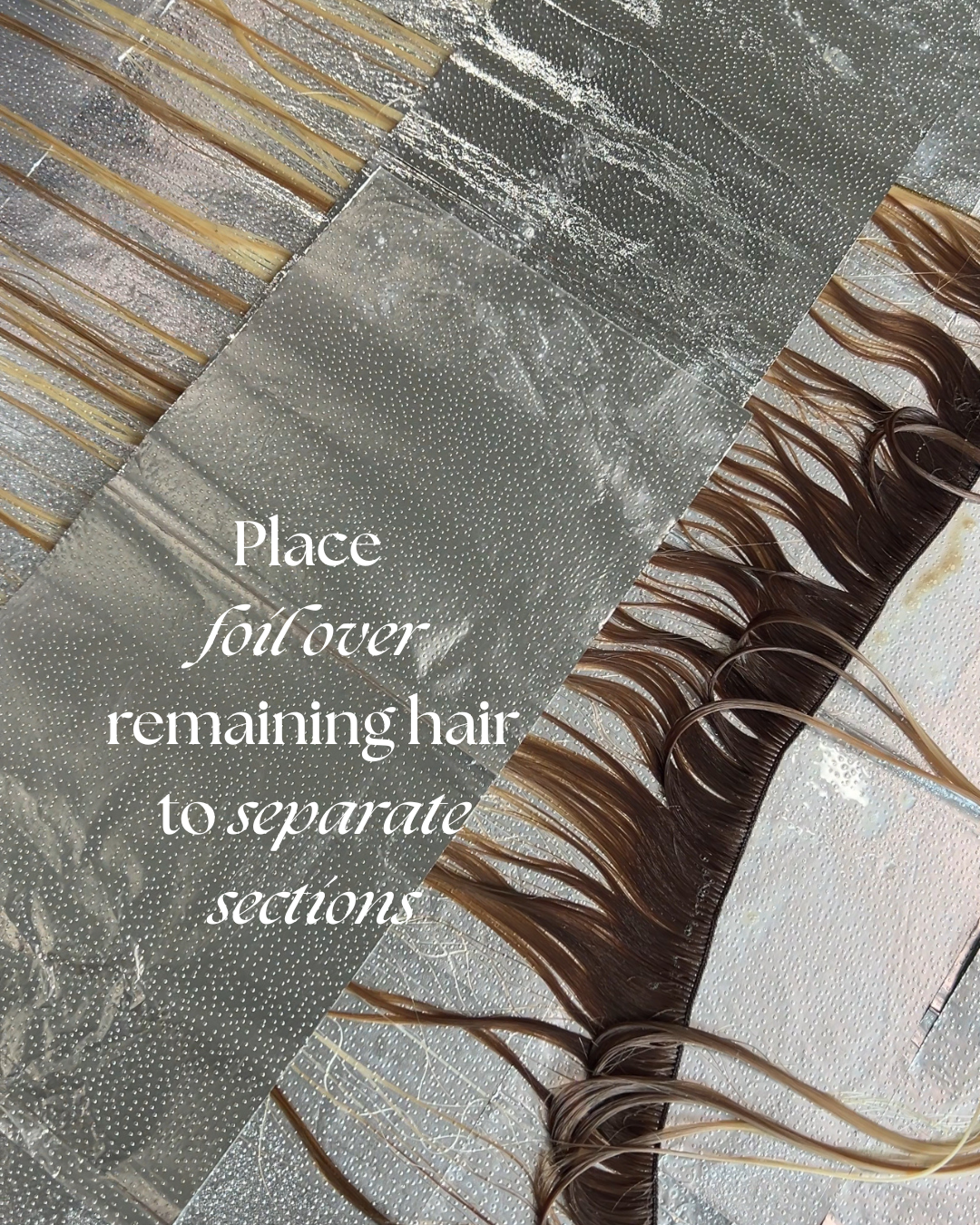
Place a fresh foil over each completed section to keep layers clean and separated.
Repeat the process for each additional weft.
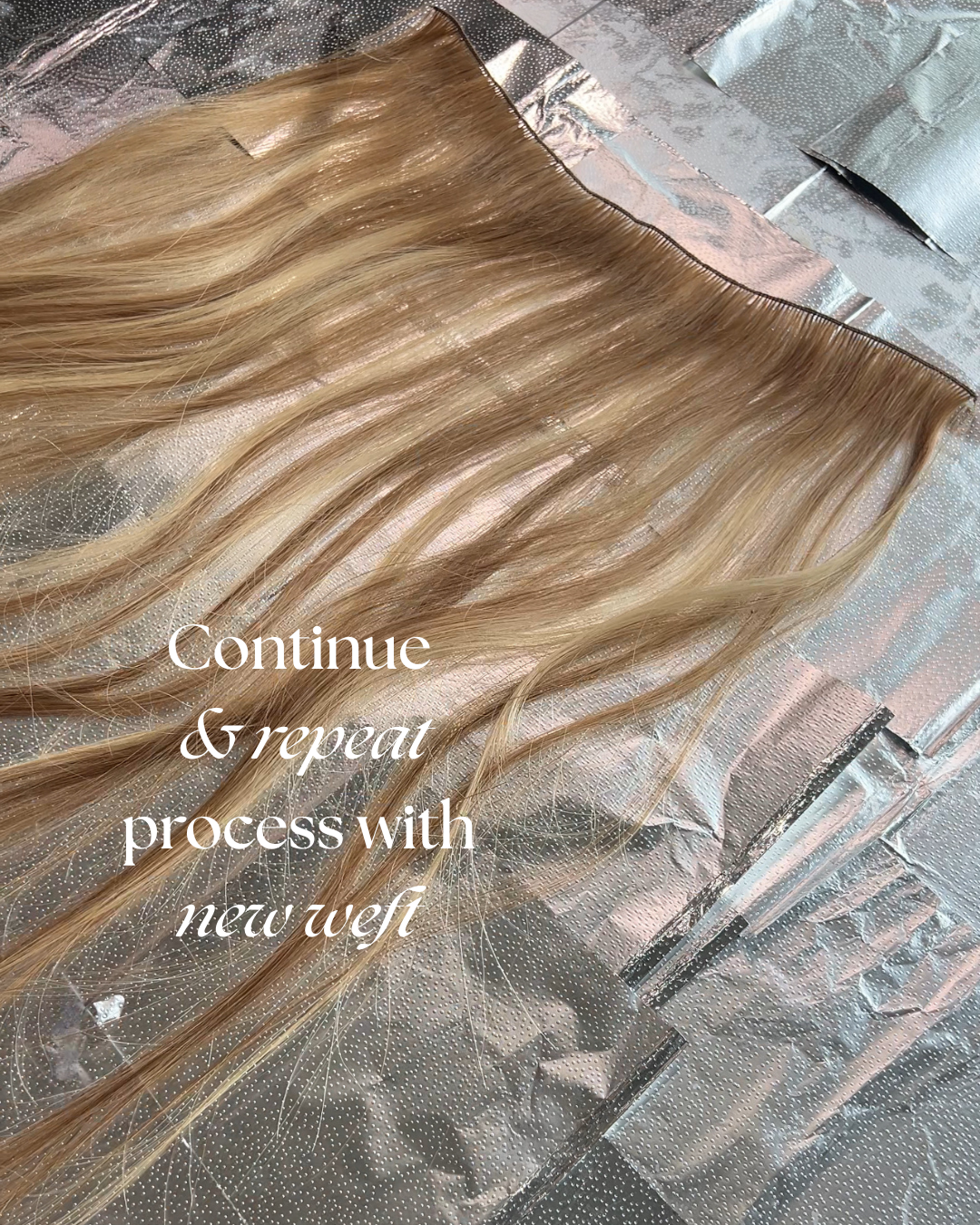
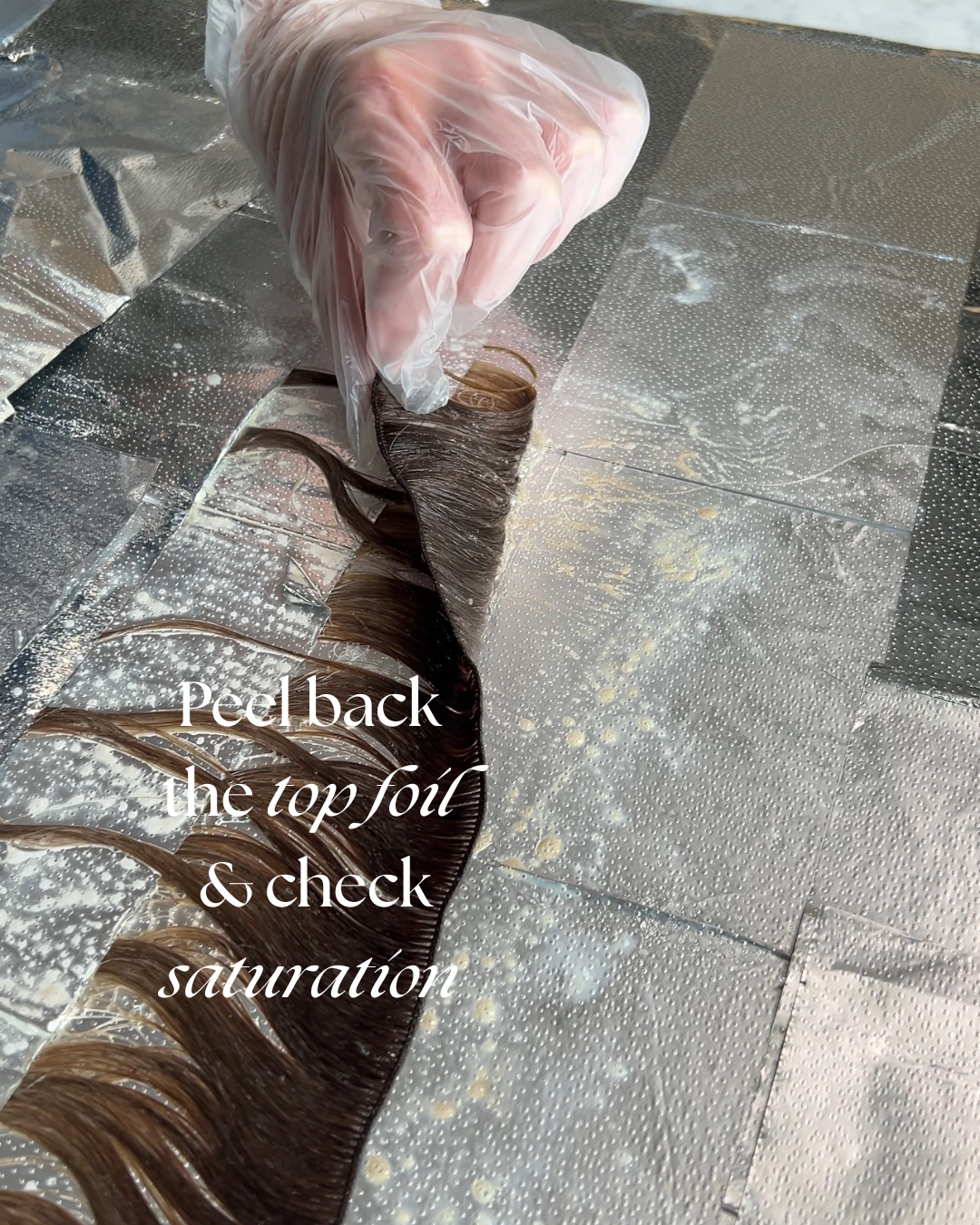
Once all wefts are foiled, carefully flip the entire stack.
If harsh lines appear, mist lightly with water and blend using a dry brush.
Gently peel back the top foil to check saturation, diffusion, and balance.
Let the color process then wash when ready.
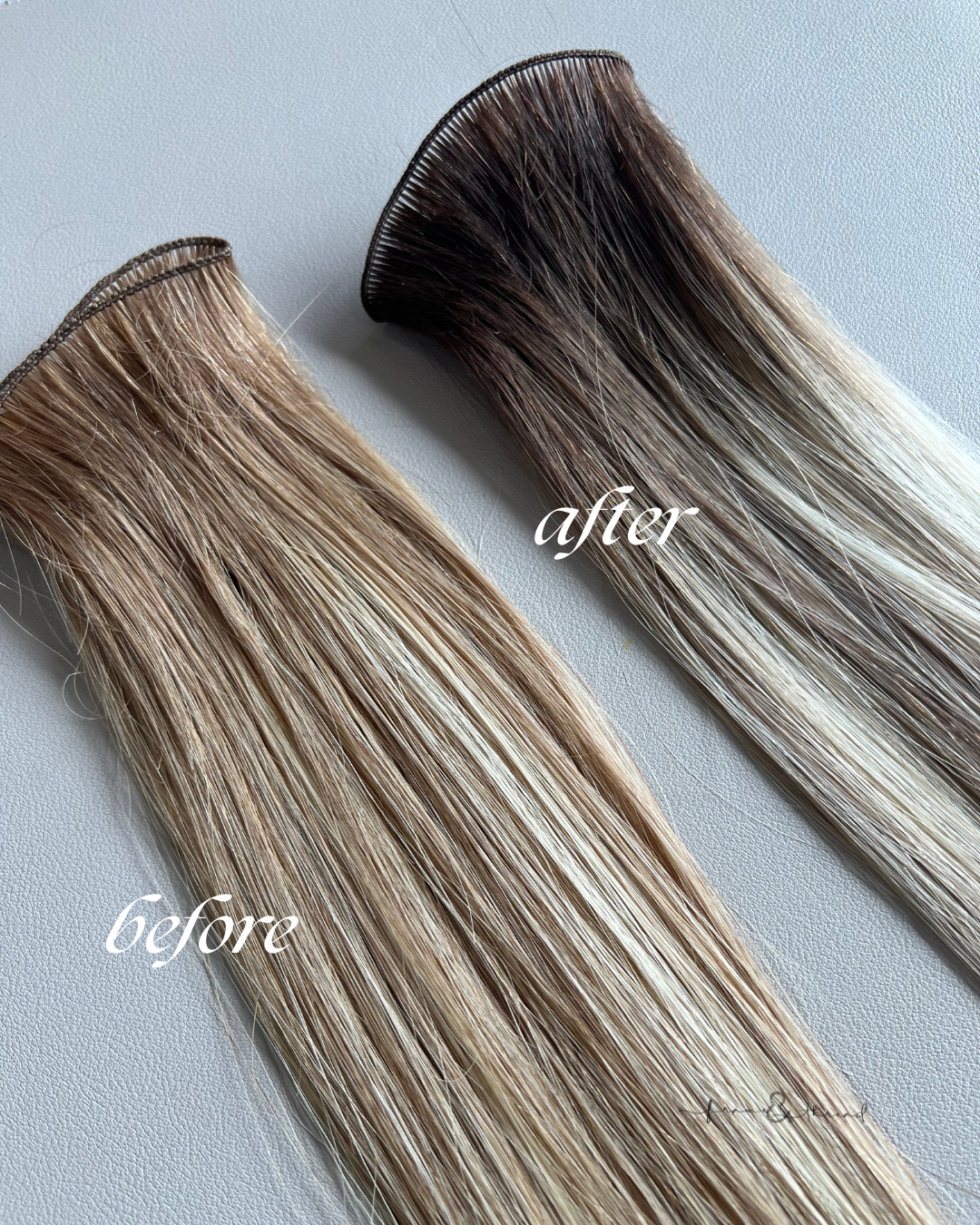
Each weft will be different but here's the formula we used in this demo:
Root: Redken Color Gels 10-Minute 7NN + 6NW with 10-volume developer
Lowlights: Schwarzkopf Vibrance 7-0 + 7-4 with 5-volume developer
Not matching the client’s natural root closely enough.
Always start with an extension shade that closely mirrors the client’s root.
Formulate one level lighter than the desired end result.
Add a touch of gold to your root formula for a more natural finish.
For very cool blondes, use a Level 10 demi-permanent mixed 1:1 with clear.
Process for 5–10 minutes while monitoring closely.
For uneven root depth, follow the same application method but adjust placement intentionally.
Map extension placement before coloring—use clips to mark left and right side wefts.
In some cases, coloring after installation provides the most seamless blend.
Many stylists use Shades EQ and never have their wefts grab pink or mauve. Until they do. Since human hair extensions are a natural product, it is not possible to know how each weft will react with every unique color formula and all of the different variables that go into processing.
Top color artists who teach weft coloring will discuss this concern and recommend proper filling before coloring with Shades EQ or avoiding it altogether on all brands of extensions.
Coloring Micro Weft Hair Extensions
One of the most important differences between micro wefts and hand-tied wefts is the way they accept color.
Our micro wefts use the exact same Slavic hair you love. The track is where the two weft types are different.
Hand-tied wefts use a combination of hair and string to create the track that holds the weft together. Both the hair and the string will take hair color so hand-tied wefts can be colored from track to tip.
Micro wefts use, polyurethane, a synthetic material to create the track. The track starts out color-matched to the weft. Micro weft hair will take color but the track will not. Some hair color may unpredictably stain the track.

Stylist trick: Some stylists use a permanent marker to color the micro weft track.
Please remember that some permanent ink may contain toxins and may irritate the skin. For your health and the safety of your clients, you should select a non-toxic permanent marker. Non-toxic ink should only be applied to the track before the weft is installed and ink must be 100% dry before install. Sharpie Extreme markers and Sharpie Portrait Colors are ACMI certified non-toxic.
⚠️ Use extra caution with demi-permanent, especially Shades EQ. Never use N, NB, or NA. With all other demi-permanent neutral and ash tones, we recommend adding some gold to the formula to prevent the hair from grabbing the base pigment and turning mauve or pink.
Never darken extensions more than one to two levels without first applying a filler. Skipping this step can result in uneven tone, excessive ash, or a hollow finish.
Always closely watch the wefts to avoid unwanted results.
Micro weft tracks are synthetic and do not accept color as the natural track on a hand-tied weft would.
Vivids used on extensions will not fade the same as they do in your client's natural hair.
Wefts should never be lightened.
Coloring wefts can shorten the longevity of the hair.
Micro wefts are sometimes called genius wefts or mini wefts.
Frame & Thread intends this as a guide for our own wefts and we can not be responsible for any use of this information with other brands. Coloring extensions is at your own risk.
The information on this page is intended for use only by licensed cosmetology professionals using professional products.